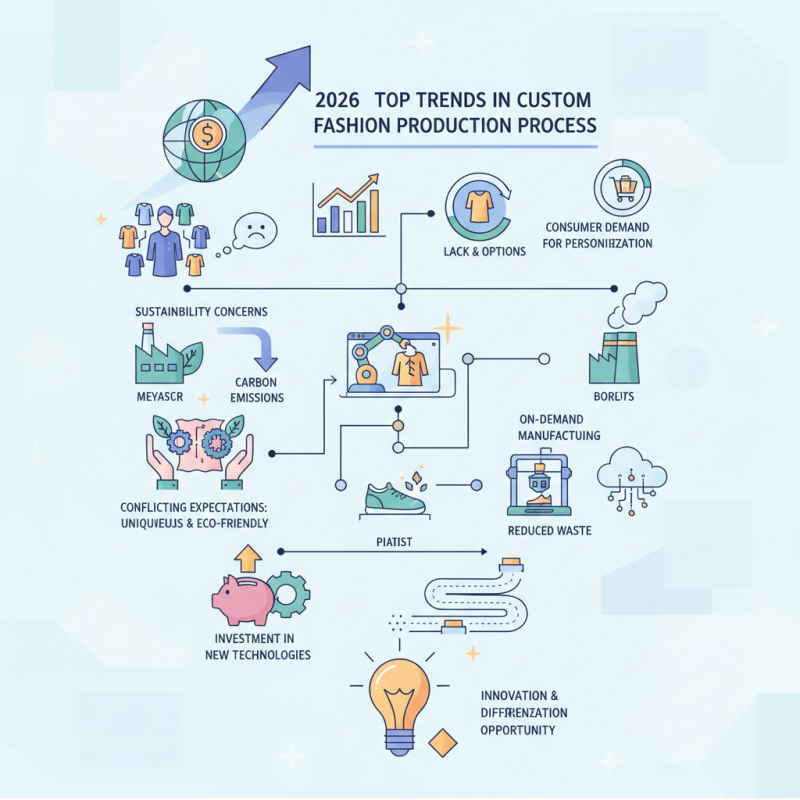
The custom fashion production process is rapidly evolving, driven by technological advancements and consumer demands. According to a report by McKinsey & Company, the global fashion industry is projected to reach $3 trillion by 2030. Customization offers brands a unique opportunity to stand out. As consumers increasingly seek personalized products, 75% of consumers are disappointed by the lack of options available.
However, challenges persist in the custom fashion manufacturing sector. Sustainability concerns loom large, with a 2022 report indicating that fashion accounts for 10% of global carbon emissions. While consumers desire unique pieces, they also demand environmentally friendly practices. Brands must navigate these conflicting expectations carefully.
The integration of technology into the custom fashion production process is transforming the landscape. On-demand manufacturing is gaining traction, reducing waste. Yet, the implementation of new technologies requires significant investment. The road ahead is fraught with hurdles, but the opportunity for innovation and differentiation remains vast.
The fashion industry is rapidly evolving, driven by emerging technologies that revolutionize custom production processes. According to a report from McKinsey, the global fashion market could grow by 3% to 4% annually through 2025. This growth is rooted in the adoption of digital tools like automated pattern-making and 3D printing, which enhance efficiency and creativity.
Digital fabrics allow designers to visualize their ideas more effectively. Tools such as AI-driven design and virtual fitting rooms reduce the time from concept to product. In fact, reports indicate that AI can cut design time by 50%. However, integrating these technologies is challenging. Many brands still struggle with data management and sustainability issues.
Tips: Embrace flexibility in your production lines. Collaborate with tech partners who understand your vision. Consider consumer feedback early in the design process to improve alignment with market demands. It's essential to stay adaptable, as the demand for personalization continues to rise. Rethink existing workflows to foster a culture of innovation.
In 2026, sustainable practices in custom fashion production are set to reshape the industry. With growing demand for eco-friendly products, brands are exploring innovative materials.
Organic cotton, recycled fabrics, and biodegradable materials are gaining traction. These choices can reduce environmental footprints significantly.
Tips: Consider local sourcing for fabrics. This reduces transport emissions and supports local economies. Engage with communities to identify sustainable materials. Transparency in the supply chain builds trust with consumers.
Customization processes are also evolving. Digital fashion technologies allow for eco-conscious design. 3D printing minimizes waste by using only necessary materials. However, the technology is not without its challenges. High energy consumption and refining processes must be addressed.
Tips: Use energy-efficient printing techniques. Regularly audit the production methods to identify areas for improvement. Collaborate with tech developers to create sustainable solutions that consider energy use. Cultivating a mindset of reflection can drive better practices in customization.
The fashion industry is experiencing a significant shift towards consumer-centric approaches. Brands are increasingly prioritizing the needs and preferences of individual customers. This is leading to a more personalized production process that reflects consumers' unique styles and values.
Technology plays a crucial role in this evolution. Innovations like AI and data analytics enable brands to gather detailed insights about consumer preferences. They can create limited runs of custom pieces based on direct feedback. This not only fosters a sense of ownership but also builds loyalty among consumers. However, it raises questions about sustainability, as constant customization can lead to overproduction and waste.
Despite the advantages, some brands struggle to fully embrace this model. Balancing personalization with efficiency remains challenging. Speeding up the production timeline often compromises quality. Brands must reflect on their processes to ensure they meet consumer expectations without sacrificing their ethical standards. As the industry embraces these trends, ongoing reflection and adaptation will be key.
| Trend | Description | Consumer Benefit | Projected Impact |
|---|---|---|---|
| Sustainable Materials | Increased use of eco-friendly fabrics and biodegradable materials in production. | Meets consumer demand for environmentally responsible products. | High potential for brand loyalty and market growth. |
| 3D Printing Technology | Utilizing 3D printing to create custom, on-demand clothing and accessories. | Offers personalized fashion options without excess waste. | Expected to reduce production costs and time significantly. |
| AI Design Assistants | Artificial intelligence tools aiding designers in creating custom fashion lines based on consumer preferences. | Enhances the customization experience for consumers. | Could streamline design processes and increase engagement with customers. |
| Blockchain for Transparency | Using blockchain technology to ensure supply chain transparency and sustainability. | Builds consumer trust through verifiable product sourcing. | Could lead to increased sales as consumers demand transparency. |
| Virtual Fitting Rooms | Technology allowing customers to try on clothes virtually before purchasing. | Improves the online shopping experience, reducing returns. | Predicted to revolutionize online retail by enhancing customer satisfaction. |
The integration of artificial intelligence (AI) in the customization processes of fashion production is revolutionizing the industry. AI technologies analyze consumer data, enabling brands to predict trends and preferences more accurately. This data-driven approach facilitates personalized experiences for each consumer, enhancing customer satisfaction and loyalty.
However, there are challenges. For instance, over-reliance on AI can lead to a lack of human creativity. While AI excels in data processing, it may miss unique design ideas that a human designer could envision. The tension between technology and artistry raises questions about authenticity in custom fashion. Brands must strike a balance between using AI for efficiency and valuing individual creativity.
Additionally, ethical considerations arise. AI tools can sometimes perpetuate biases present in their training data. This can affect the diversity and inclusivity of fashion produced through AI. Reflecting on these issues is crucial for the growth of any brand in the competitive market. Embracing AI requires a critical look at its limitations and ethical implications. The future of custom fashion lies in thoughtful integration of these technologies, where human ingenuity and AI capabilities create a harmonious design process.
The supply chain management in custom fashion production is evolving. Brands are increasingly seeking agility and sustainability. Traditional methods are often slow and rigid. New technologies are shaking up this landscape. Remote collaboration tools allow designers and manufacturers to work seamlessly. This reduces communication barriers and speeds up decision-making.
Sourcing practices are becoming more localized. This shift not only shortens delivery times but also lowers carbon footprints. However, it raises questions about cost and scalability. Smaller suppliers may struggle to meet large demands. Data-driven insights play a crucial role in optimizing operations. Businesses now rely on analytics to forecast trends and manage inventory effectively. Yet, reliance on technology can lead to data overload.
Sustainability remains at the forefront. Many companies face obstacles in implementing eco-friendly materials. The standardization of practices is often lacking. Moreover, transparency in sourcing is still a major challenge. Consumers are demanding more information about products. Addressing these issues requires collaboration between all supply chain partners. The balance between speed and responsibility is delicate. Finding the right approach is crucial for long-term success.
This chart displays the anticipated percentage of adoption for key trends in the custom fashion production supply chain by 2026. The data highlights the growing significance of sustainability, technology integration, and consumer personalization in the industry.
: Emerging technologies like 3D printing and automated pattern-making enhance efficiency and creativity in fashion design.
AI analyzes consumer data, predicting trends and personalizing experiences, which boosts customer satisfaction and loyalty.
Brands face data management issues and concerns about sustainability while trying to adopt new technologies.
Flexibility in production lines is essential for adapting to changing consumer demands and fostering innovation.
Yes, reliance on AI can limit human creativity, as it may overlook unique design ideas that only humans can generate.
AI can perpetuate biases from training data, affecting diversity and inclusivity in designed products.
Brands seek agility and sustainability, using remote collaboration tools to enhance communication and speed up decisions.
Local sourcing shortens delivery times and lowers carbon footprints but can challenge smaller suppliers with large demands.
Many companies struggle with the standardization of eco-friendly practices and transparency in sourcing materials.
By collaborating across the supply chain, brands can find sustainable solutions while maintaining efficiency in production.
The "2026 Top Trends in Custom Fashion Production Process" highlights key developments that are shaping the future of the fashion industry. Emerging technologies, such as 3D printing and digital design tools, are revolutionizing the custom fashion production process, allowing for greater efficiency and personalization. Additionally, the increasing emphasis on sustainable practices is prompting brands to adopt eco-friendly materials and processes, aligning with consumer demands for environmentally responsible fashion.
In 2026, consumer-centric approaches will dominate fashion production models, focusing on bespoke solutions that cater to individual preferences. The impact of artificial intelligence on customization processes is significant, as it enhances data analysis and consumer insights, driving more tailored offerings. Furthermore, evolving trends in supply chain management will streamline operations, ensuring that the custom fashion production process is both agile and responsive to market changes. Together, these trends are set to redefine the landscape of custom fashion in the coming years.

Mibel Garment