What Is Custom Fashion Trends 2026 for Global Buyers?

Time:2026-10-20 Author:Henry
0%

Custom fashion trends 2026 are reshaping how global buyers plan collections, source materials, and test new products. Buyers now seek distinctive designs, flexible order quantities, and dependable production partners. They want garments that feel original, yet remain practical for everyday customers.

This article explores the strongest directions shaping Custom fashion trends 2026. Expect refined utility wear, relaxed tailoring, modular garments, expressive details, and softer technical fabrics. Earth-inspired colors may share space with sharp digital tones. Recycled fibers, traceable materials, and lower-waste sampling will also influence purchasing decisions. However, sustainability claims require evidence, not attractive labels. Buyers should request fiber information, production records, and relevant testing documents before confirming orders.

Digital tools are changing the buying process. Three-dimensional samples can reduce early development time. Small pilot orders can reveal fit, fabric performance, and customer response. A supplier’s communication quality matters too. Clear size charts, realistic lead times, and consistent quality checks build commercial trust. These details often matter more than dramatic runway images.

No forecast is perfect. Some predictions will miss.

Global buyers should therefore treat trends as working signals, not fixed rules. A color may perform well in Seoul but fail in Berlin. A popular silhouette may need adjustment for climate, culture, or local sizing. Experience remains essential. By combining market data, supplier expertise, customer feedback, and responsible production standards, buyers can turn Custom fashion trends 2026 into commercially useful collections. The most successful choices may not be the loudest ones. They will be relevant, measurable, and adaptable.
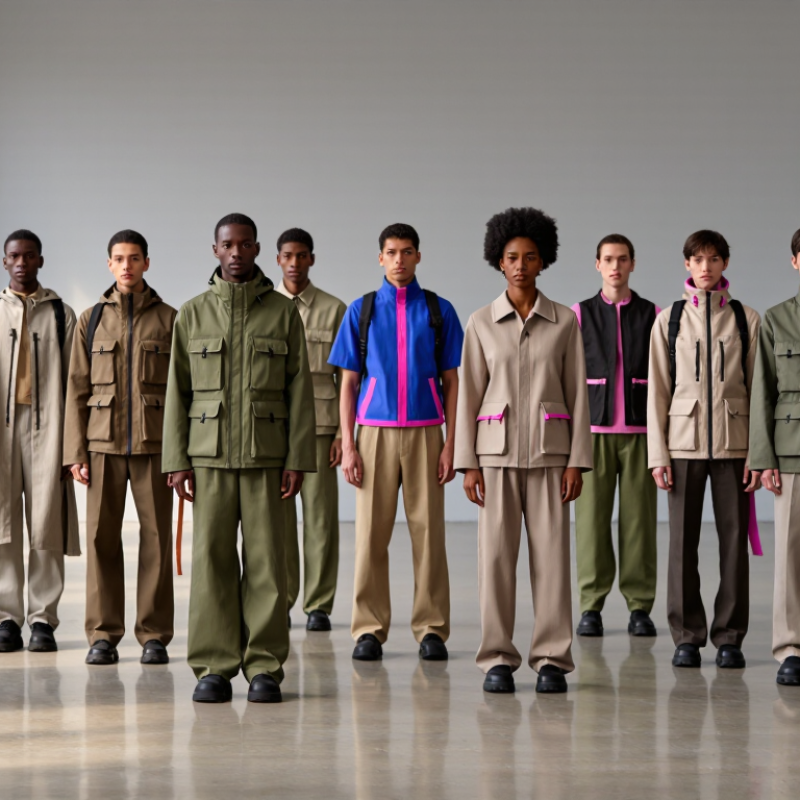
What Is Custom Fashion Trends 2026 for Global Buyers?

Defining Custom Fashion: The $5.09B Custom T-Shirt Market Baseline

Custom fashion in 2026 is becoming more responsive, personal, and production-aware. Global buyers want designs that reflect local tastes without creating excessive inventory. Custom t-shirts remain the easiest entry point for this shift.

The $5.09 billion custom t-shirt market baseline gives buyers a useful commercial reference. It shows the scale of demand for personalized apparel. However, this figure should not represent the entire custom fashion economy. Market reports may use different definitions, regions, and sales channels. The number is useful, but not perfect. Buyers should check the report’s date, research method, and product scope before using it for planning.

For 2026 orders, practical evaluation matters more than visual appeal alone. Buyers should request physical samples before confirming larger quantities. Check fabric weight, shrinkage, color accuracy, print softness, and seam strength. A 180 GSM cotton shirt may suit everyday retail, while heavier fabric can support premium positioning. Small-batch production may reduce inventory risk, but unit costs can rise. Custom sizing also needs care, especially across different regional measurements. Supplier records should show testing procedures, material details, production timelines, and responsible workplace standards. Trends can change quickly. A design that feels current in January may seem dated by summer. That risk deserves honest attention.

Mapping 2026 Personalization: Grand View Research’s 11.1% CAGR Forecast

What Is Custom Fashion Trends 2026 for Global Buyers?

Mapping 2026 Personalization: Grand View Research’s 11.1% CAGR Forecast

Grand View Research forecasts an 11.1% compound annual growth rate for the personalized fashion market. This figure signals stronger demand for products shaped around individual identity, fit, and lifestyle. It is not a guarantee. Buyers still need evidence from regional sales, customer feedback, and repeat-order data.

Custom fashion in 2026 may move beyond simple logo placement. Global shoppers are requesting adjustable lengths, modular pockets, inclusive sizing, and color choices suited to local preferences. A buyer might test three sleeve lengths, two fabric weights, and a narrow color range before scaling production. Small-batch sampling can expose weak stitching, inaccurate measurements, or uncomfortable trims early.

Digital fitting tools will support this process, but human review remains important. Body data can be incomplete. Consumer habits also differ sharply across markets. A relaxed fit in one region may feel oversized elsewhere. Buyers should check measurement charts, material composition, care instructions, and production tolerances before approval. Clear documentation supports reliable purchasing and helps reduce avoidable returns.

Personalization creates opportunity, yet it can complicate inventory planning. Too many options may confuse shoppers and increase unused stock. A practical approach is to begin with controlled variations, then expand after measurable demand appears. The forecast is encouraging, but careful testing matters more than excitement.

Prioritizing Sustainable Materials as Global Apparel Nears $1.8 Trillion

What Is Custom Fashion Trends 2026 for Global Buyers?

Custom fashion in 2026 will move beyond unusual silhouettes and louder colors. Material choices will shape the buying decision. Statista Market Insights projects global apparel revenue to approach $1.8 trillion, increasing pressure on suppliers to prove value and responsibility. Textile Exchange’s Materials Market Report 2024 recorded 124 million tonnes of global fiber production in 2023. Recycled fibers represented only about 7.6%. The gap remains significant.

For global buyers, sustainable customization means selecting organic cotton, recycled polyester, linen, hemp, or regenerated cellulosic fibers with clear documentation. Ask for fiber composition, recycled content, certification scope, dyeing details, and factory-level traceability. A recycled label is not automatically better. Energy use, water consumption, transport distance, and shedding risks still matter. This is where product development becomes practical, not decorative. Small-batch sampling can reveal fabric shrinkage, color inconsistency, and weak seam performance before larger orders. However, low-impact materials may cost more, and some suppliers still provide incomplete evidence. Buyers should question attractive claims. I do too.

Tips: Request a material test report before approving samples. Compare durability after washing. Use digital product records when available. Set realistic minimum quantities to reduce excess inventory, but avoid treating every “eco” claim as verified. “Natural” does not always mean sustainable.

Selecting Digital Production: 3D Sampling, On-Demand Orders, and Lower Waste

What Is Custom Fashion Trends 2026 for Global Buyers?

Digital production is reshaping custom fashion buying in 2026. 3D sampling lets teams review silhouettes, colors, and fabric movement before making physical samples. Fit still matters. However, digital fitting reduces repeated courier shipments and unnecessary prototypes. Buyers can compare several revisions within one working day. This supports clearer communication across different time zones. It also helps factories estimate materials, labor, and production risks earlier.

On-demand orders offer another practical shift. Instead of producing large quantities, buyers can test smaller batches and reorder proven styles. This approach may reduce unsold inventory, but it requires accurate sales data and flexible production planning. Small orders can cost more per piece. That weakness should not be hidden. Lower waste depends on responsible forecasting, durable materials, and realistic delivery schedules. Digital tools alone cannot solve poor planning.

Tips: Request a 3D sample before approving a physical prototype. Check measurements, texture references, and color accuracy carefully. Ask how revisions are recorded and who confirms the final specifications. For global orders, clarify size standards and packaging requirements early. Keep a physical sample for quality comparison when possible. It is slower, but useful. Review your first on-demand order honestly, including defects, returns, and leftover materials. That reflection can improve the next production cycle.

Custom Fashion Trends 2026: Why Digital Production Matters

Global fashion indicators show why buyers are moving toward 3D sampling, on-demand orders, and lower-waste production models.

The apparel and footwear sector is estimated to create 2–8% of global greenhouse-gas emissions. Less than 1% of used clothing is recycled into new clothing, while clothing utilization has fallen by approximately 36% over the past 15 years. Digital sampling can reduce physical prototypes, and on-demand production can help align output with confirmed demand.

Sources: United Nations Environment Programme; Ellen MacArthur Foundation. Percentages use different definitions and should be read as separate global indicators rather than directly additive values.

Evaluating Global Buyer Fit Through Price, MOQ, Lead Time, and Compliance

Custom fashion trends in 2026 will attract global buyers only when creative design matches commercial reality. A soft sculptural jacket may look promising, but its price can rise quickly through special fabrics, complex seams, and manual finishing. Buyers should compare the full landed cost, including sampling, packaging, freight, duties, and quality inspections. A low factory quote may hide expensive revisions.

MOQ remains a practical test of buyer fit. Large orders can reduce unit prices, but they may create excess stock when a trend changes within one season. Smaller trial quantities support market testing, although they often increase fabric waste and labor costs. Small tests matter. In sourcing reviews, I recommend confirming size ratios, color limits, and reorder conditions before approving development. This approach is not perfect, but it exposes weak assumptions early.

Lead time should include material booking, sample approval, production, inspection, and transportation. A 45-day promise means little if fabric arrives after the cutting window. Buyers also need compliance evidence, such as fiber labels, care instructions, restricted-substance checks, and accurate customs documents. Requirements vary by destination, so local verification remains essential. A forecast can still miss. Therefore, teams should keep realistic buffers and record every change in writing, especially when custom details affect safety, labeling, or delivery commitments.

What Is Custom Fashion Trends 2026 for Global Buyers? — Evaluating Global Buyer Fit Through Price, MOQ, Lead Time, and Compliance
Custom Fashion Trend Typical Product Scope Indicative FOB Price per Unit Typical MOQ Sample Lead Time Bulk Lead Time Best-Fit Buyer Profile Key Compliance and Documentation Considerations
Low-Impact Basics Custom T-shirts, polo shirts, sweatshirts, and everyday jersey separates using organic or recycled fibers. USD 4.50–14.00 200–500 units per color 7–14 business days 35–55 business days Entry-level and mid-market buyers seeking repeatable core products with broad size coverage. Fiber composition labeling REACH chemical restrictions Country-of-origin marking Recycled-content evidence where claimed
Performance and Athleisure Leggings, training tops, technical shorts, lightweight jackets, and moisture-management garments. USD 8.00–24.00 300–800 units per style 10–18 business days 45–65 business days Sports, wellness, travel, and digitally native buyers requiring functional fabrics and consistent fit. Fiber and care labels Colorfastness testing Restricted-substance testing Accurate performance claims
Modest and Coverage-Focused Wear Longline shirts, relaxed trousers, tunics, lightweight layering pieces, and full-coverage dresses. USD 9.00–28.00 200–500 units per color 10–16 business days 45–70 business days Regional and international buyers serving conservative, climate-sensitive, or coverage-focused customer groups. Non-see-through fabric assessment Fiber labeling Care instructions Social-compliance audit often requested
Resort and Occasion Dressing Printed dresses, coordinated sets, crochet-look garments, lightweight shirts, and embellished evening pieces. USD 12.00–42.00 150–400 units per color 14–21 business days 50–75 business days Seasonal, destination, eventwear, and premium online buyers accepting higher design complexity. Print and dye restricted-substance testing Embellishment attachment checks Fiber labels Packaging material declarations
Responsible Denim Custom jeans, overshirts, denim skirts, utility jackets, and low-water or recycled-fiber denim programs. USD 15.00–38.00 300–800 units per wash 14–24 business days 55–85 business days Mid-market buyers with established size grading, wash development, and sustainability reporting needs. REACH chemical requirements Azo-dye and heavy-metal testing Wash-process records Metal-trim safety checks
Lightweight Knitwear Fine-gauge cardigans, polo knits, sleeveless tops, ribbed dresses, and transitional layering garments. USD 13.00–35.00 200–500 units per color 14–21 business days 50–75 business days Buyers targeting transitional wardrobes, elevated basics, and compact seasonal collections. Fiber-content verification Dimensional-stability testing Pilling assessment Care-label accuracy
Utility and Workwear-Inspired Fashion Multi-pocket trousers, overshirts, chore jackets, cargo skirts, and durable everyday outer layers. USD 16.00–45.00 300–700 units per color 14–24 business days 60–90 business days Urban, outdoor-lifestyle, and value-conscious buyers prioritizing durability and practical detailing. Seam-strength testing Trim and cord safety Chemical compliance Accurate durability claims
Adaptive and Inclusive Fit Easy-access tops, seated-fit trousers, sensory-considerate garments, extended size ranges, and adjustable closures. USD 14.00–40.00 150–400 units per style 14–24 business days 55–85 business days Specialty, healthcare-adjacent, inclusive, and direct-to-consumer buyers with clearly defined fit requirements. Accurate measurement charts Closure and attachment safety Fiber and care labeling Product claims substantiation
Weather-Responsive Outerwear Packable windbreakers, insulated vests, lightweight rain shells, quilted jackets, and modular layers. USD 22.00–65.00 300–800 units per color 18–28 business days 65–95 business days Outdoor, travel, commuter, and climate-adaptation buyers with higher technical-performance expectations. Water-repellency claim testing Insulation composition Cord and drawstring safety REACH and regional labeling rules
Small-Batch Custom Collections Limited capsule drops, made-to-order garments, digital-print pieces, and test-market assortments. USD 18.00–75.00 50–150 units per style 10–20 business days 35–60 business days Independent retailers and online sellers validating demand before committing to larger production volumes. General product safety Textile labeling Print and dye testing Traceable material records
Planning notes: Prices are indicative FOB ranges in U.S. dollars for custom or private-label apparel and vary according to fabric, construction, decoration, grading, packaging, testing, order volume, and shipping terms. Lead times are counted in business days after approval of the final sample, materials, artwork, and purchase order. MOQ means minimum order quantity and may apply separately by style, color, fabric, or wash. Buyers should confirm the destination market’s current requirements, including EU REACH and textile-labeling rules, U.S. FTC textile labeling and applicable CPSIA requirements for children’s apparel, UK textile-labeling rules, and other local product-safety obligations before production.

FAQS

What is the estimated custom t-shirt market size for 2026?

The baseline is about $5.09 billion. It indicates strong demand for personalized apparel. The figure is not perfect. Definitions and regions may differ.

Should buyers trust market estimates without further checking?

No. Review the report date, research method, regions, and product scope. Different reports may measure different sales channels. Planning needs careful comparison.

What should buyers check before approving custom t-shirts?

Request physical samples first. Check fabric weight, shrinkage, color accuracy, print softness, and seam strength. Inspect the shirt after washing. Small details matter.

How can fabric weight affect product positioning?

A 180 GSM cotton shirt may suit everyday retail. Heavier fabric can create a more premium feel. It may also increase material and shipping costs.

Which sustainable materials can global buyers consider?

Options include organic cotton, recycled polyester, linen, hemp, and regenerated cellulosic fibers. Request composition and recycled-content records. “Natural” does not always mean sustainable.

How can buyers verify environmental claims?

Ask for material tests, certification scope, dyeing details, and factory traceability. Also consider energy, water, transport, and fiber-shedding risks. Attractive claims need evidence.

Can digital sampling reduce production waste?

Three-dimensional sampling can reduce repeated prototypes and courier shipments. Buyers can review colors, silhouettes, and revisions quickly. Digital fitting is useful, but physical fit still matters.

What are the advantages and weaknesses of on-demand production?

Smaller batches can reduce unsold inventory. Buyers can reorder styles that perform well. However, unit costs may rise. Accurate sales data is essential.

What should global buyers clarify before production begins?

Confirm measurements, size standards, packaging, timelines, materials, and revision records. Keep a physical sample for comparison when possible. It is slower, but useful.

How should buyers improve future production cycles?

Review defects, returns, leftover materials, and delivery performance. Record what failed, not only what looked good. The next order may still need adjustment.

Conclusion

Custom fashion trends 2026 are reshaping the apparel industry by making personalization, sustainability, and production flexibility central to global buying decisions. Custom fashion includes made-to-order garments, personalized graphics, tailored fits, and small-batch collections. The custom T-shirt market, valued at approximately $5.09 billion, provides a strong baseline for understanding this growth, while personalization is expected to expand at an estimated 11.1% CAGR. As the global apparel market approaches $1.8 trillion, buyers are also placing greater emphasis on recycled, organic, and responsibly sourced materials.

Digital production is becoming another defining factor. 3D sampling can reduce development time, on-demand manufacturing can limit excess inventory, and data-driven ordering can help lower material waste. For international buyers, the best supplier fit depends on more than design quality. Price, minimum order quantity, lead time, material transparency, production consistency, and compliance documentation should all be evaluated before placing an order. Together, these factors create a practical framework for selecting reliable and future-ready custom fashion solutions.

Henry

Henry

Henry is a dedicated marketing professional with a profound expertise in the company's offerings. With years of experience in the industry, he possesses an impressive understanding of the market dynamics and consumer behaviors that drive success. Henry is committed to sharing his insights through......