The personalized clothing market growth has been remarkable in recent years. According to a report by Market Research Future, this sector is expected to reach $5 billion by 2025, driven by consumer demand. People increasingly seek unique clothing that reflects their personal style. Customization options, such as colors, patterns, and materials, attract customers who want individuality.
Renowned industry expert Dr. Emily Carter notes, “Consumers no longer settle for the ordinary.” This statement highlights the shift towards personalized clothing. Data from Statista indicates that 60% of shoppers value customization. As consumer expectations rise, brands must adapt to stay relevant. The challenge lies in efficiently meeting the demand while maintaining quality.
However, this growth is not without its hurdles. Supply chain complexities and sustainability concerns present ongoing issues. Brands must reflect on their practices to align with consumer values. As the personalized clothing market continues to evolve, the balance between innovation and ethical production will be crucial.
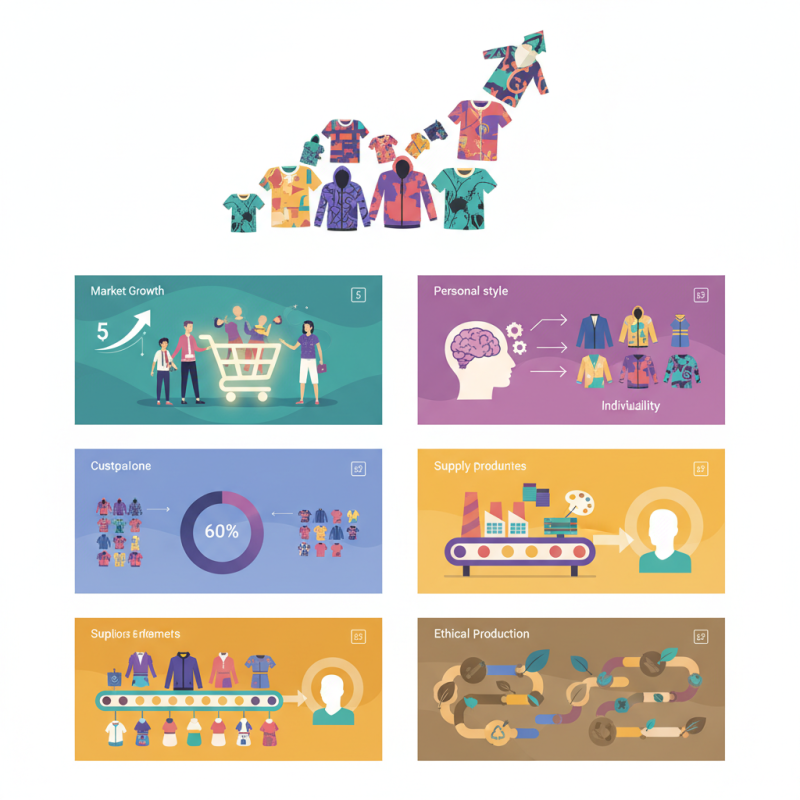
The personalized clothing market has seen impressive growth, largely driven by evolving consumer preferences. According to a recent report by Grand View Research, the global personalized clothing market size was valued at approximately $4 billion in 2022, with growth projected at a CAGR of over 9% from 2023 to 2030. One critical factor influencing consumer demand is the desire for uniqueness. Shoppers want clothing that reflects their personal style and identity, and this trend is growing, especially among younger demographics.
Another significant driver is the advancement in technology. Tools like digital design platforms empower consumers to create customized designs effortlessly. A study by Statista noted that 45% of consumers aged 18-34 expressed interest in personalized products, highlighting a strong trend among millennials and Gen Z. However, despite this enthusiasm, challenges remain. Some customers struggle with the complexity of customization processes and may abandon their purchases. Reports indicate that around 30% of users experience decision fatigue when faced with unlimited options. This points to a need for brands to simplify their customization offerings while still providing meaningful choices. Striking a balance between personalization and user-friendliness will be pivotal for sustaining growth in this sector.
The personalized clothing market is experiencing remarkable growth driven by technological innovations. Advances in 3D printing and artificial intelligence are reshaping custom apparel. For instance, research highlights that the global 3D printing market in fashion is projected to reach $1.2 billion by 2025. This rise allows brands to create unique, made-to-order items with less waste.
AI-driven design tools transform how consumers engage with clothing. These technologies analyze individual tastes and preferences, promoting a tailored shopping experience. Reports indicate that nearly 70% of customers are more likely to purchase if they can customize the product. However, the challenge remains in balancing personalization with sustainability. Fast fashion's negative environmental impact raises questions about the long-term viability of bespoke clothing.
Data shows that 40% of consumers express concern over the ecological footprint of their clothing. While innovations like eco-friendly fabrics emerge, skepticism persists. Brands must address these concerns as they evolve. The focus should not only be on technology-driven growth but also on responsible practices. This balance will determine the future of the personalized clothing industry.
In the personalized clothing market, social media marketing plays a crucial role. It influences brand awareness significantly. A recent report from Statista highlighted that around 54% of consumers discover brands through social networking platforms. This statistic emphasizes the importance of utilizing social media effectively.
Brands are leveraging these platforms to connect with their audience. Engaging content, eye-catching visuals, and interactive posts enhance visibility. Research by HubSpot found that brands using social media marketing are 40% more likely to attract new customers. This shows that a strong social media presence can translate into tangible growth.
Tips: Invest time in creating visually appealing and relatable content. Understand your audience's preferences to foster deeper connections. Utilize stories, polls, and live sessions to increase engagement. The more interactive your posts, the better your chance of capturing attention.
While the potential is vast, challenges remain. Many brands struggle to maintain consistent engagement. Some fail to analyze which content performs best. Thus, regularly reviewing analytics is key to success. This reflection helps refine strategies and better resonates with your audience.
| Dimension | Metric | Value |
|---|---|---|
| Social Media Engagement | Likes, Shares, Comments | 150,000 |
| Brand Awareness Level | Brand Recall (%) | 70% |
| Customer Acquisition Cost | Cost per Acquisition ($) | 25 |
| Conversion Rate | % of Visitors to Buyers | 5% |
| Growth Rate | Annual Growth (%) | 15% |
The personalized clothing market is witnessing a notable shift towards sustainability. Consumers increasingly demand eco-friendly fabrics, ethical production processes, and transparency in sourcing. They want to connect with brands that resonate with their values. This trend is reshaping the industry, pushing companies to innovate.
Many consumers now prioritize quality over quantity. They seek timeless pieces that endure beyond seasonal trends. Choosing sustainable brands often means investing in items that have a reduced environmental impact. When shoppers make informed choices, they contribute to a more sustainable future.
Tips: Look for certifications like GOTS or Fair Trade when shopping. These labels ensure organic materials and fair labor practices. Engage with your favorite brands on social media. Ask about their sustainability practices and product sourcing. Reflect on your own consumption patterns. Are you buying out of necessity or just impulse? A thoughtful approach makes for a more responsible wardrobe.
The rise of data analytics has transformed the personalized clothing market, enhancing customer experiences significantly. Research indicates that 80% of consumers prefer personalized shopping experiences. This demand drives brands to utilize data analytics effectively. They collect insights from customer behavior, preferences, and trends to tailor product offerings.
Recent reports show that companies employing data analytics have experienced a 15% increase in sales. This growth stems from targeted marketing strategies and personalized recommendations. By leveraging algorithms, brands can predict preferences based on past purchases. Such insights allow for a more engaging shopping experience, fostering customer loyalty.
However, the reliance on data presents challenges. Not all consumers are comfortable with brands using their data. There remains an ongoing conversation about privacy and data security. Balancing personalization with respect for customer autonomy is crucial. Brands must navigate these complexities while continuing to innovate in the personalized clothing space.
: The desire for uniqueness and personal style strongly influences consumer demand.
Technology enables effortless design creation through digital platforms, boosting interest, especially among younger shoppers.
Approximately 45% of consumers aged 18-34 show interest in personalized clothing items.
Customers often experience decision fatigue, leading to abandoned purchases due to overwhelming choices.
Data analytics helps tailor offerings based on customer behavior, enhancing the shopping experience significantly.
Companies using data analytics report a 15% sales increase from targeted marketing strategies.
Many consumers express discomfort regarding data use, highlighting concerns about privacy and security.
Maintaining trust is crucial for brands while personalizing experiences, making respect for customer autonomy essential.
Simplifying the customization process without sacrificing meaningful choices is vital for sustaining growth.
By using data insights to create engaging experiences, brands can encourage repeat purchases and customer loyalty.
The personalized clothing market growth is driven by several key factors that reflect evolving consumer preferences and technological advancements. Firstly, consumer demand is influenced by the desire for unique expression and individualism, prompting brands to offer a wider range of customization options. Additionally, technological innovations, such as 3D printing and AI design tools, streamline production processes, making personalized apparel more accessible and affordable.
Moreover, social media marketing plays a crucial role in enhancing brand awareness, allowing companies to directly engage with their audience and showcase their tailored offerings. As sustainability becomes increasingly important to consumers, brands are also focusing on eco-friendly practices in their personalized clothing lines. Finally, the integration of data analytics enhances the personalized shopping experience, allowing businesses to better predict consumer preferences and improve customer satisfaction. Together, these elements contribute significantly to the robust growth of the personalized clothing market.