How to Capture Personalized Clothing Market Growth
Personalized clothing market growth is reshaping how brands design, produce, and sell apparel. Customers increasingly expect garments to reflect their identity, measurements, and daily routines. A name on a hoodie is no longer the only option. Fit, fabric, color, embroidery, and low-volume graphics can all become personal touchpoints.
The opportunity is measurable. Grand View Research estimates that the global custom T-shirt printing market reached approximately USD 5.1 billion in 2023. It also projects strong growth through 2030, supported by digital printing, e-commerce, and creator-led brands. McKinsey’s State of Fashion research identifies personalization as an important tool for improving customer engagement and conversion. These findings suggest that customization is moving beyond promotional products. It is becoming part of mainstream fashion commerce.
But growth is not automatic. A brand may offer hundreds of choices and still create a confusing shopping experience. Customers may also question delivery times, sizing accuracy, and return policies. These practical details matter. This article explores how companies can capture Personalized clothing market growth through reliable customization systems, clearer product data, and useful customer insights. It considers made-to-order production, digital design tools, and responsible inventory planning. The evidence is encouraging, but imperfect. Market forecasts differ by definition, geography, and product category. Therefore, strong decisions should combine industry reports with first-hand sales data, customer feedback, and small-scale testing. The best strategy may begin with one product, one audience, and one measurable promise.
Define the Personalized Clothing Market and Its Growth Drivers
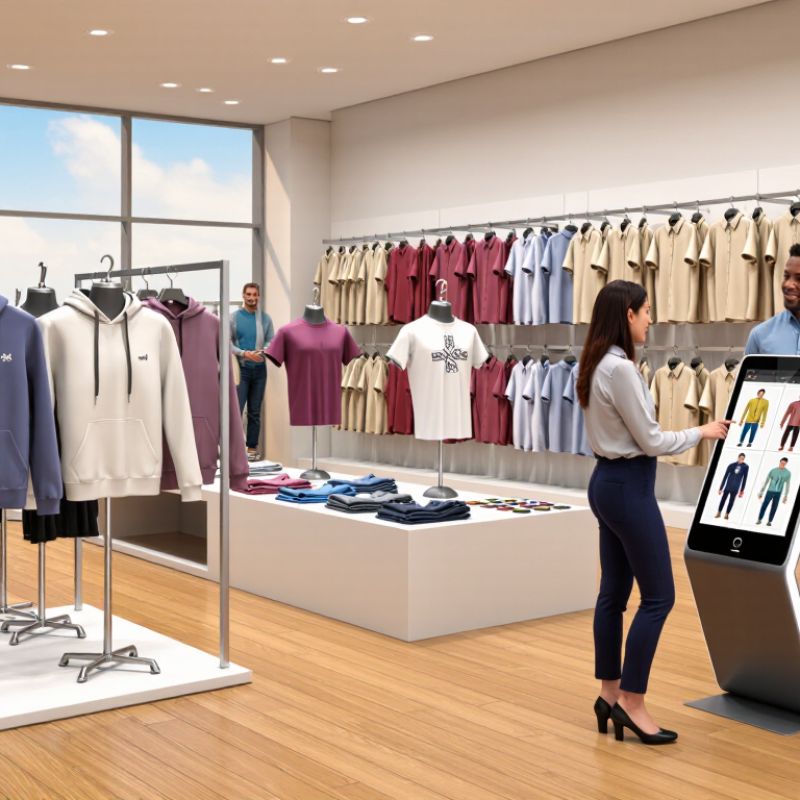
Personalized clothing is apparel adapted to an individual’s measurements, artwork, wording, fit preferences, or use case. It includes made-to-order garments, small-batch uniforms, custom prints, and digitally configured products. The market grows when shoppers want identity, comfort, and more flexible retail choices. Digital design tools now make it easier to preview colors, names, and placement before purchase. On-demand production can also reduce unsold inventory, although material waste has not disappeared. That matters. Buyers increasingly expect clear sizing, durable decoration, and delivery estimates they can trust.
Several growth drivers reinforce each other. Social platforms make personal style visible and encourage event-based designs. Body-scanning tools and recommendation systems may improve fit, but only with accurate customer information. Flexible manufacturing helps workshops serve niche groups without large orders. Schools, clubs, local teams, and small companies can create repeat demand for coordinated apparel. My experience reviewing custom-order workflows suggests that proof approval and responsive support prevent more complaints than flashy features. Yet the sector has weak points. Inconsistent sizing, unclear returns, and disappointing fabric feel can quickly damage confidence.
Tips: Show a realistic garment preview and state the fabric weight. Explain measurement steps in plain language. Assign one trained person to check proofs. Test wash durability before scaling. Ask customers what failed, not only what they liked. Simple feedback often reveals hidden friction.
How to Capture Personalized Clothing Market Growth - Define the Personalized Clothing Market and Its Growth Drivers
| Dimension | Metric or Definition | Current Evidence | Growth Driver or Market Implication | Reference |
|---|---|---|---|---|
| Market Definition | Personalized clothing market scope | Clothing designed or modified according to an individual customer's selected attributes, such as graphics, text, colors, garment construction, measurements, embroidery, printing, or fit. | The market includes made-to-order apparel, mass customization, print-on-demand clothing, customized workwear, personalized sportswear, and made-to-measure garments. Standard ready-to-wear products without customer-level modification are excluded. | Market taxonomy based on the product and production characteristics described by the United Nations Centre for Trade Facilitation and Electronic Business. |
| Market Measurement | Availability of a standalone market total | No universally adopted official global statistical series currently isolates all personalized clothing activities. | Market sizing should combine customized apparel revenue, made-to-measure services, digital printing, embroidery, customization fees, and relevant e-commerce orders while avoiding double counting. | United Nations economic classification resources |
| Digital Reach | Global internet adoption | Approximately 5.5 billion people were online in 2024, representing about 68% of the world's population. | A larger connected customer base supports online design tools, digital product visualization, social discovery, remote fitting consultations, and direct-to-consumer customization. | International Telecommunication Union, Facts and Figures 2024 |
| Online Purchase Behavior | Individuals purchasing online in the European Union | 77% of EU internet users purchased goods or services online in 2023. | High online purchasing penetration creates favorable conditions for digital customization interfaces, customer-uploaded artwork, personalized recommendations, and online order tracking. | Eurostat, E-commerce statistics for individuals |
| E-commerce Channel | U.S. e-commerce share of total retail sales | E-commerce accounted for approximately 16.1% of total U.S. retail sales in 2024. | Digital channels are increasingly suitable for personalized apparel because customization can be configured, previewed, priced, and ordered without requiring a physical store visit. | U.S. Census Bureau, Quarterly Retail E-Commerce Sales |
| Customization Technology | Digital production methods | On-demand digital printing, computer-controlled embroidery, automated cutting, and digital pattern-making enable short production runs and individualized designs. | These technologies reduce setup requirements and make low-volume orders more economically viable than many conventional mass-production methods. | International Labour Organization, textile and garment industry resources |
| Sustainability Driver | Textile waste pressure | The global textile system generates an estimated 92 million tonnes of textile waste each year. | Made-to-order production can reduce speculative inventory and unsold stock when supported by accurate demand forecasting, efficient production, and responsible material use. | United Nations Environment Programme, textile sustainability resources |
| Consumer Value | Functional and emotional personalization | Customization can address identity expression, gifting, group affiliation, cultural relevance, fit preference, accessibility, and professional uniform requirements. | Products with a clear personal or functional benefit can support higher engagement, stronger differentiation, and lower direct price comparability than generic garments. | Organisation for Economic Co-operation and Development, consumer policy resources |
| Key Customer Segments | Priority demand groups | Major use cases include individual consumers, gift buyers, sports and community groups, schools, employers, event organizers, and creators. | Segment-specific design templates, minimum-order quantities, delivery promises, and pricing models can improve conversion and operational efficiency. | United Nations International Standard Industrial Classification |
| Revenue Model | Main monetization components | Revenue may come from the base garment, customization fees, premium materials, design services, personalization of fit, rush production, and repeat group orders. | A modular pricing structure allows customers to enter at a basic price point while creating opportunities for premium margins through complex design, superior materials, and faster fulfillment. | Organisation for Economic Co-operation and Development, industry resources |
| Operational Constraint | Lead time and production complexity | Individualized orders generally require more data capture, approval steps, production scheduling, quality checks, and customer communication than standardized inventory. | Growth depends on accurate design previews, automated order validation, standardized customization rules, reliable sizing data, and transparent delivery estimates. | International Organization for Standardization, standards resources |
| Growth KPI | Recommended indicators for market tracking | Track customized-order share, conversion rate, average order value, customization attachment rate, repeat purchase rate, defect rate, return rate, lead time, and waste per order. | These indicators connect demand growth with profitability, customer satisfaction, production efficiency, and sustainability performance. | Global Reporting Initiative, sustainability reporting standards |
FAQS
They need accurate sizing, flexible production, reliable suppliers, and dependable delivery. A beautiful interface cannot fix weak factory capacity.
They can test garment shape before cutting fabric. Body scanning may reduce measurement errors, but poor lighting can distort results.
No. Automated predictions support decisions but cannot handle every unusual body shape. Prediction is not truth.
Made-to-order production can reduce unsold inventory. Small batches allow faster testing, but customized orders may increase planning effort and unit costs.
Verify fiber data, delivery times, available capacity, and material traceability. Keep backup suppliers for important fabrics and trims.
Offer standard customization, advanced fit adjustments, and premium hand finishing. Show the added labor beside each price.
Show sleeve changes, fabric swatches, and name placement before checkout. Customers understand value better when they see the process.
Collect preference data only with clear consent. Recommend practical options instead of sending constant discounts. Excessive suggestions may feel intrusive.
Track conversion, average order value, alteration requests, return rates, sampling time, and delivery accuracy. Numbers may expose uncomfortable weaknesses.
Start with one city or customer segment. Combine online ordering, regional production partners, and limited fitting locations. Expand only after learning what fails.
Conclusion
The personalized clothing market is expanding as consumers increasingly seek garments that reflect their identity, preferences, lifestyle, and fit requirements. Personalized clothing market growth is driven by rising demand for unique designs, improved digital customization tools, flexible production methods, and greater access to on-demand manufacturing. To capture this opportunity, businesses should define clear customer segments, understand their functional and emotional needs, and identify preferred levels of customization, from colors and patterns to measurements and design details.
Success also depends on evaluating technology, production capacity, supplier reliability, inventory models, and delivery efficiency. Companies can strengthen their position by developing transparent pricing, targeted marketing messages, and convenient distribution channels that support both online and offline experiences. Continuous performance measurement is essential, including tracking customer satisfaction, conversion rates, repeat purchases, production efficiency, and profitability. By analyzing these results and monitoring changing consumer expectations, businesses can refine their offerings, reduce operational risks, and discover future opportunities for sustainable growth in the personalized clothing sector.
