How to Start a Custom Fashion Brand 10 Best Tips

Time:2026-09-25 Author:Sienna
0%

How to Start a Custom Fashion Brand: 10 Best Tips

How to start a custom fashion brand begins with a clear customer, not a large clothing collection. A strong brand may serve petite professionals, ethical streetwear buyers, or clients seeking made-to-measure evening pieces. Define one audience first. Study its habits, budgets, frustrations, and preferred fabrics. Then create a focused product promise that customers can understand quickly.

Fashion authority Coco Chanel famously said, “In order to be irreplaceable, one must always be different.” That difference needs practical proof. Sketch a small capsule collection, source reliable fabric suppliers, and test one sample repeatedly. Check seam strength, shrinkage, colorfastness, comfort, and fit. Keep written measurements and production notes. These details improve consistency and support trustworthy customer service. A professional brand also explains lead times, alterations, care instructions, and refund policies clearly.

Do not confuse attention with demand. A beautiful mood board cannot replace customer interviews or careful cost calculations. Include fabric, labor, packaging, shipping, photography, platform fees, and potential returns. Many new founders underprice custom work because they overlook revision time. That mistake can damage both cash flow and confidence. Begin with a manageable order process, collect honest feedback, and adjust the design when evidence demands it. Your first launch may feel incomplete. That is normal. Reflection matters. Review which pieces received inquiries, which sizes caused problems, and which promises were difficult to keep. The following ten tips turn those observations into a practical roadmap for building a distinctive, responsible, and commercially realistic custom fashion brand.
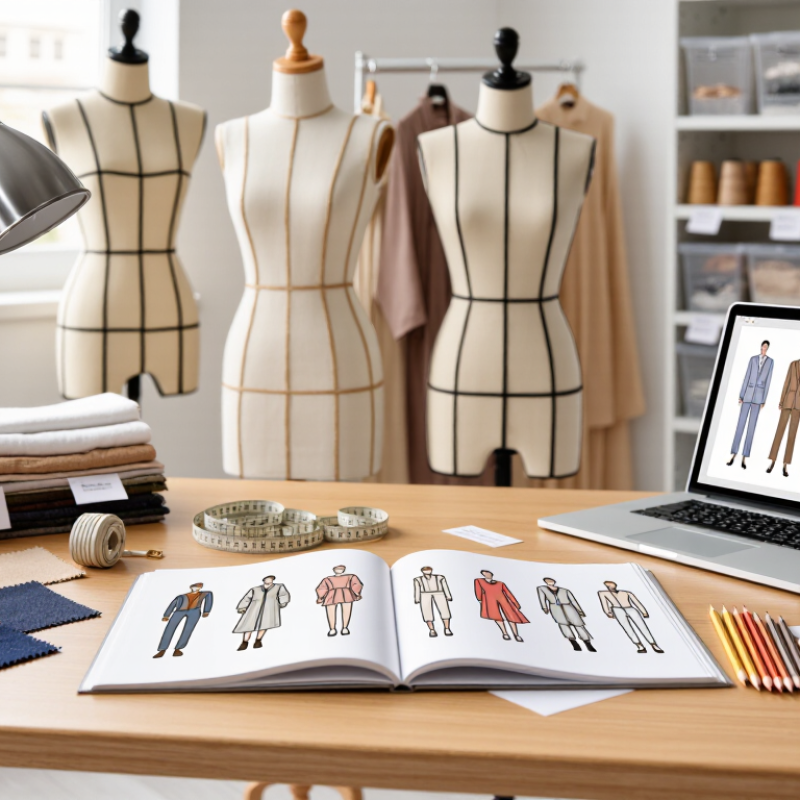
How to Start a Custom Fashion Brand 10 Best Tips

Define a Niche in McKinsey’s 2–4% 2024 Fashion Growth Outlook

McKinsey’s 2024 fashion outlook projected global industry growth of 2–4%. Treat that range as market context, not a promise of easy sales. Growth varies across regions, price points, and categories, and a small label may feel little of it. A clear niche helps turn a broad market into a specific customer. Think petite commuters who struggle to find well-cut trousers, or nurses seeking durable layers with useful pockets.

Get close to the problem. Speak with potential buyers, study how they wear and care for similar clothes, and note what they cannot find. Ask about fit, fabric, and price—not just whether they like your idea. Keep it measurable. A few honest conversations can reveal patterns, though ten people are not the whole market. That assumption can be wrong.

Build a small sample around one unmet need, then test it with real wearers. Check seam comfort after a full workday, inspect how fabric behaves after washing, and record alterations requested. Track interest alongside actual purchase intent. Small tests help. Resist adding more styles just to look established; extra choices can drain limited time and cash. Your niche may need revision as customers respond, and that is part of learning rather than failure.

Validate Demand, Pricing, and a Distinctive Brand Position

Before designing a full collection, test whether people want the product. Create three rough sketches and show them to a focused audience. Ask about preferred colors, fabric, fit, and buying occasions. A simple landing page can measure email sign-ups, while a small survey reveals weak assumptions. Do not trust compliments alone. I once treated friendly feedback as demand, but almost nobody joined the waiting list.

Pricing needs evidence, not guesswork. Calculate fabric, sampling, labor, packaging, payment fees, shipping, and returns. Then compare your target price with similar quality levels, not just cheaper alternatives. Offer a limited preorder only when delivery timing is realistic. Track which price receives serious commitments. If the margin looks attractive but ignores your own working hours, it is misleading. Keep a written cost sheet and update it after every sample.

Tips: Define one clear customer and one memorable reason to choose your clothes. Your position might focus on adjustable sizing, small-batch construction, or practical evening wear. Test that message in short product descriptions and conversations. Watch what people repeat in their own words. Those phrases are often stronger than polished slogans. Keep improving the idea; your first positioning may be too broad.

How to Start a Custom Fashion Brand: 10 Best Tips — Validate Demand, Pricing, and a Distinctive Brand Position
No. Strategic Area Recommended Action Measurable Data Point Decision Rule or Formula Evidence to Collect
1 Define a Specific Customer Choose one primary customer group, one purchase occasion, and one clear problem to solve before designing the first collection. 20–30 structured customer interviews, with at least 5 recurring problems identified. Continue only when the same need appears repeatedly without leading the interviewee toward the answer. Interview notes, purchase history, current alternatives, acceptable price range, and reasons for dissatisfaction.
2 Test Demand Before Production Create a simple landing page showing the concept, product benefits, estimated delivery timing, and an email or waitlist form. Track qualified visits, conversion rate, and traffic source. A practical early test is 100–300 qualified visits. Use the conversion rate formula:
Sign-ups ÷ Qualified Visitors × 100
Compare results by audience and message rather than relying only on total traffic.
Unique visitors, sign-ups, cost per sign-up, device type, location, and the message that generated each sign-up.
3 Use a Paid Preorder Signal Offer a clearly explained, refundable preorder or reservation for a limited first production run. Record the number of paid reservations, cancellation requests, refund rate, and time from visit to purchase. Paid demand is stronger evidence than an uncommitted survey response. Set a minimum production quantity only after confirming that deposits cover the required launch threshold. Payment confirmations, refunds, customer questions, delivery expectations, and reasons for abandoned checkout.
4 Build a Distinctive Position Write one positioning statement covering the target customer, product category, functional benefit, emotional benefit, and proof point. Limit the launch message to 1 primary audience, 1 central promise, and no more than 3 supporting reasons to believe. If a potential customer cannot explain the difference in one sentence after viewing the page, simplify the positioning. Unaided message recall, customer vocabulary, competitor-category comparisons, and the questions customers ask before buying.
5 Set Price from Unit Economics Calculate price using fabric, trims, labor, packaging, inbound freight, payment fees, fulfillment, expected returns, and applicable taxes. Use a target gross-margin assumption of approximately 60%–70% for planning, then validate it against actual production and selling costs. Retail Price = Landed Product Cost ÷ (1 − Target Gross Margin)
Example: $32 ÷ (1 − 0.65) = approximately $91.43.
Supplier quotations, sample revisions, labor time, freight invoices, payment fees, packaging cost, and return-related cost.
6 Protect Contribution Margin Separate gross margin from contribution margin so advertising, fulfillment, discounts, and returns are not overlooked. Calculate contribution margin for every product and channel before increasing marketing spend. Contribution Margin = Selling Price − Variable Product Cost − Selling Fees − Fulfillment − Expected Returns
Scale only when the result remains positive after realistic deductions.
Average order value, discount rate, payment fee, shipping subsidy, return rate, refund value, and customer acquisition cost.
7 Control MOQ and Inventory Risk Request minimum order quantities, production lead times, size curves, material requirements, and reorder terms from suppliers before committing. Prepare at least three quantity scenarios: conservative, expected, and optimistic. Include a cash-flow schedule by production milestone. Use the reorder-point formula:
Average Daily Demand × Supplier Lead Time + Safety Stock
Do not treat optimistic demand as the base case.
MOQ, lead time, defect allowance, payment schedule, available cash, forecast accuracy, and inventory aging.
8 Validate Fit and Quality Test samples on people representing the intended size range and usage conditions before approving bulk production. Record measurements, fit comments, wash results, seam performance, colorfastness, and defect counts for each sample revision. Correct repeatable fit or construction problems before production. A low sample cost is not a reason to accept a known quality issue. Measurement chart, fit-test photographs, wash-test results, defect log, fabric composition, and care-label requirements.
9 Run Small Channel Experiments Test one sales channel at a time with a controlled offer, consistent product page, and clearly tracked campaign links. Compare conversion rate, customer acquisition cost, average order value, return rate, and contribution margin by channel. Use a simple test structure: 3 creative variations × 2 audience messages. Change one major variable at a time. Sessions, add-to-cart rate, checkout completion, orders, revenue, advertising spend, acquisition cost, and post-purchase feedback.
10 Measure and Improve the Launch Review customer behavior weekly and improve the product, offer, sizing information, content, and service process based on evidence. Monitor conversion rate, return rate, repeat-purchase rate, customer complaints, delivery time, and net cash movement. Use a weekly dashboard with the same definitions each week. Prioritize changes that improve both customer experience and contribution margin. Order records, support tickets, return reasons, review themes, delivery tracking, repeat orders, and cash-flow variance.

Choose Materials in a 124-Million-Tonne Fiber Market (Textile Exchange, 2023)

Starting a custom fashion brand begins with a material decision, not a logo. Textile Exchange’s 2023 Materials Market Report places global fiber production at about 124 million tonnes. That scale hides serious differences in water use, durability, recycling, and traceability.

Build a material shortlist before designing the full collection. Compare fiber content, fabric weight, shrinkage, abrasion resistance, and minimum order quantities. Request supplier documentation, then verify its scope and date. Textile Exchange reports that polyester remains the largest fiber category, while recycled polyester still represents only a limited share of total production. This suggests opportunity, but recycled content alone does not prove a lower impact.

Test samples after washing. Small details matter. A soft fabric may pill quickly. A recycled blend may feel excellent but complicate future recycling. The Ellen MacArthur Foundation has reported that less than 1% of clothing is recycled into new clothing fiber. That figure should change how you plan trims, blends, and product lifespan.

A useful development sheet should record fiber origin, dye process, fabric weight, test results, supplier location, and certification claims. Keep evidence with every sample. A common mistake is choosing the cheapest fabric before checking performance. It can create higher replacement costs and unwanted waste later. Your first range may need fewer materials, not more. That limitation can improve consistency, although it may also expose gaps in supplier capacity.

How to Start a Custom Fashion Brand: Choose Materials in a 124-Million-Tonne Fiber Market

Global fiber production reached approximately 124 million tonnes in 2023. Polyester and cotton represented the largest material groups, while smaller categories may offer opportunities for differentiated, lower-volume fashion products.

Estimated 2023 global fiber volumes, rounded from reported material-market shares. Source: Textile Exchange market reporting.

Plan Sampling, Fit, and Production Before Committing to Inventory

How to Start a Custom Fashion Brand: 10 Best Tips

A custom fashion brand should begin with sampling, not bulk inventory. The most expensive mistake is producing a large order before testing the garment properly. Create a clear tech pack with measurements, fabric details, stitching instructions, and approved trims. Request a first sample, then inspect it under natural light. Check sleeve balance, seam tension, fabric recovery, and comfort during movement. Take photos from several angles. Small flaws become costly when multiplied across hundreds of pieces.

Tip: Test fit on more than one body type. A sample that fits one model may fail on real customers. Record chest, waist, hip, rise, and length measurements carefully. Ask testers to sit, walk, stretch, and wash the garment. Their comments may be uncomfortable, but they reveal practical problems. My early assumption that a beautiful sample was ready for production was wrong. The neckline still shifted after washing.

Use a fit sample before approving the final production sample. Mark every correction directly on the garment and update the measurement chart. Confirm shrinkage, color consistency, seam strength, and label placement with the factory. Request a small pilot run when possible. Review the finished pieces before committing to full inventory. A slower decision is often cheaper. Keep written approvals, revision dates, and inspection notes in one shared file. Suppliers work more reliably when instructions are specific, measurable, and easy to verify.

Launch and Measure Sales as U.S. Resale Apparel Grows 14% (ThredUp, 2024)

A 2024 resale-market report estimated that U.S. resale apparel grew 14%. For a custom fashion label, that growth signals rising interest in garments with a longer life, but it does not guarantee demand for every design.

Treat resale as context, not a sales forecast.

Start with a small, clearly defined collection and track which pieces attract real orders.

Measure sales beyond total revenue. Record units sold, average order value, product returns, and how quickly each style sells.

Note details customers respond to, such as adjustable waist ties, sturdy seams, or a specific fabric texture.
Small signals matter.

Compare weekly results with your production costs and inventory, then adjust quantities before committing to another run.

Resale potential is also worth watching. Ask customers whether they would repair, pass on, or resell a piece, and make care instructions easy to follow.

These answers can reveal where durability matters most.

The data may disappoint. A popular post might bring attention without purchases, while a quiet design sells steadily. Keep those results visible in a simple spreadsheet, and review them before choosing your next colors, sizes, and production volume.

FAQS

How can I test demand before designing a full clothing collection?

Create three rough sketches first. Show them to a focused audience. Ask about colors, fabric, fit, and buying occasions. Use a landing page to measure email sign-ups. Compliments are not enough; serious interest needs evidence.

What should I measure during early customer research?

Track sign-ups, survey answers, and product requests. Notice repeated phrases customers use. Compare their words with your original idea. My early mistake was trusting friendly feedback, while almost nobody joined the waiting list.

How should I calculate a realistic clothing price?

Include fabric, samples, labor, packaging, payment fees, shipping, and returns. Add the value of your working hours. Compare your price with similar quality levels, not only cheaper products. A high margin can look attractive but still be misleading.

When is a preorder useful?

Use a limited preorder only when delivery timing feels realistic. Track which price receives serious commitments. Keep a written cost sheet. Update it after every sample, because small changes can alter the final price.

How do I choose suitable fabrics?

Compare fiber content, fabric weight, shrinkage, abrasion resistance, and minimum order quantities. Request supplier documents with clear dates and coverage. Test every sample after washing. Soft fabric can pill quickly.

Does recycled content automatically mean lower environmental impact?

No. Recycled content alone proves very little. Check durability, fiber blends, dye processes, and future recycling options. Less than one percent of clothing is recycled into new clothing fiber. That should influence trims and product lifespan.

What information should a material development sheet include?

Record fiber origin, dye process, fabric weight, test results, supplier location, and certification claims. Keep evidence beside each sample. A cheaper fabric may fail sooner. This can create replacements, waste, and customer disappointment.

Which sales figures matter after launch?

Track units sold, average order value, returns, and selling speed. Record details customers mention, such as sturdy seams or adjustable waist ties. Review results weekly. A popular post may create attention without purchases.

How can resale interest guide future designs?

Ask whether customers would repair, pass on, or resell each garment. Provide simple care instructions. Watch which fabrics and seams support longer use. Resale interest gives useful context, but it cannot guarantee future sales.

How should I decide the next production quantity?

Use real orders, inventory levels, returns, and weekly sales patterns. Adjust quantities before committing to another run. Begin with fewer materials and clearer styles. This may expose supplier limits, but hiding those gaps creates bigger problems.

Conclusion

How to start a custom fashion brand begins with choosing a focused niche rather than trying to appeal to everyone. With fashion growth projected at just 2–4% in 2024, a clear point of difference can help a new business stand out. Before investing heavily, test customer interest, suitable price points, and the value of your design concept. Research materials carefully, considering quality, cost, availability, and environmental impact in a global fiber market estimated at 124 million tonnes in 2023.

Next, plan the product development process before committing to large quantities. Create samples, refine fit and construction, and confirm production details so you can address problems early. Start with a manageable inventory, then launch, track sales and customer feedback, and adjust your products and positioning based on what you learn. The U.S. resale apparel market’s 14% growth in 2023 also points to the value of durability and thoughtful product choices. A measured, evidence-led approach can help turn a distinctive idea into a more resilient fashion business.

Sienna

Sienna

Sienna is a skilled marketing professional with a deep expertise in our company’s core products and services. With a passion for innovation and detail, she plays a pivotal role in crafting insightful blog posts that not only highlight the unique features of our offerings but also provide valuable......