China Top 10 Small Batch Custom Apparel Manufacturers?
Finding reliable partners for Small batch custom apparel production can be difficult, especially when quality, communication, and minimum order quantities vary widely. China offers many experienced manufacturers, but selecting the right one requires more than comparing factory photos or low prices. This guide introduces China’s top 10 small batch custom apparel manufacturers and examines their practical strengths.
The evaluation focuses on production experience, fabric sourcing, sampling accuracy, customization options, quality control, and export communication. It also considers whether manufacturers support manageable minimum orders, clear pricing, and realistic delivery schedules. A workshop that produces 50 embroidered hoodies may not follow the same process as a factory handling 5,000 pieces. Details matter.
Look closely.
The listed companies may serve different needs, including startup collections, boutique labels, promotional clothing, and limited seasonal launches. Some may excel at cut-and-sew garments, while others specialize in screen printing, embroidery, or private-label packaging. However, supplier capabilities can change over time. Certifications, machinery, pricing, and production capacity should be verified directly before placing an order.
This overview is designed to support informed decisions, not replace due diligence. Request recent samples, confirm fabric compositions, review inspection procedures, and discuss communication expectations in writing. Mistakes can still happen, especially with color matching or sizing. That is worth admitting. A dependable manufacturer should respond professionally, explain limitations, and offer practical solutions rather than promise everything. With careful comparison, brands can reduce production risks and build more consistent apparel collections.
What Defines a Small-Batch Custom Apparel Manufacturer in China?
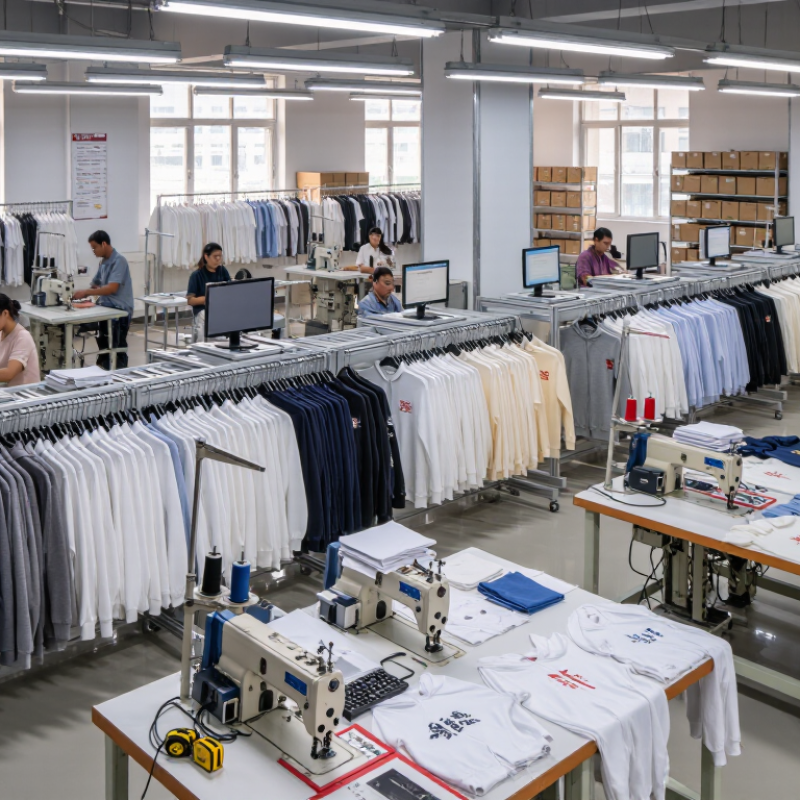
A small-batch custom apparel manufacturer in China is built for flexibility, not only volume. It usually accepts lower minimum order quantities, such as 30 to 300 pieces, depending on the garment and decoration method. The factory should support sampling, size adjustments, fabric selection, and small production runs. Clear communication matters. A reliable team confirms measurements, color references, artwork files, packaging, and delivery dates before cutting fabric. One overlooked detail can affect every finished piece.
Production capability also defines this type of manufacturer. Look for documented quality checks during fabric inspection, sewing, printing, embroidery, and final packing. Ask whether the workshop can repeat the same fit across several small orders. It should explain material sources, testing options, payment terms, and realistic lead times. Photos are useful, but they are not proof. Factory records, sample reviews, and independent inspections provide stronger evidence. No supplier is perfect; even experienced teams can misjudge shrinkage or color under different lighting.
Tips: Request one pre-production sample before approving the full batch. Measure it yourself after washing. Keep a written tech pack with tolerances, fabric weight, labels, and stitching details. Compare the sample with the approved version. Small orders may cost more per piece, but they reduce inventory risk and allow practical testing. Do not choose only by price. A low quote can hide weaker fabric, rushed sewing, or unclear correction policies.
China Top 10 Small Batch Custom Apparel Manufacturers? - What Defines a Small-Batch Custom Apparel Manufacturer in China?
Comparative profiles based on commonly used small-batch apparel production criteria in China. The profiles are presented without company or brand names.
| Profile | Primary Small-Batch Focus | Typical MOQ (per style/color) |
Sample Lead Time | Bulk Lead Time | Suitable Product Types | Customization Capability | Quality-Control Practices | Best Fit | Small-Batch Readiness |
|---|---|---|---|---|---|---|---|---|---|
| Profile 01 | Low-volume cut-and-sew production | 50–100 units | 7–14 days | 20–35 days | T-shirts, hoodies, sweatshirts, casual separates | Custom patterns, labels, trims, embroidery, screen printing | Pre-production sample approval, fabric inspection, inline checks, final inspection | Startups and capsule collections | High |
| Profile 02 | Private-label basics with flexible quantities | 100–200 units | 10–18 days | 25–40 days | Basic jerseywear, polos, tanks, leggings | Custom sizing, woven labels, hangtags, packaging, color matching | AQL-based sampling, measurement checks, needle detection where applicable | Emerging private labels | High |
| Profile 03 | Made-to-order and sampling support | 30–80 units | 5–12 days | 18–30 days | Fashion tops, skirts, lightweight jackets, uniforms | Tech-pack review, pattern development, grading, prototype revisions | Pattern-to-sample comparison, seam-strength checks, appearance inspection | Designers testing new styles | Very High |
| Profile 04 | Sustainable and recycled-fabric apparel | 100–300 units | 10–20 days | 30–45 days | Organic cotton tees, recycled activewear, casualwear | Fabric sourcing, recycled-content options, low-impact trims, custom branding | Material composition review, colorfastness testing, dimensional stability checks | Sustainability-focused collections | High |
| Profile 05 | Athleisure and performance garments | 150–300 units | 12–21 days | 30–50 days | Sports tops, joggers, shorts, compression garments | Moisture-management fabrics, flatlock seams, reflective details, heat-transfer graphics | Stretch recovery, seam construction, print adhesion, measurement inspections | Fitness and lifestyle brands | Medium–High |
| Profile 06 | Premium heavyweight and structured garments | 100–250 units | 12–20 days | 30–45 days | Heavyweight hoodies, overshirts, workwear, outer layers | Fabric weight selection, custom washes, rib development, patch application | Fabric weight verification, wash testing, construction inspection, final audit | Premium streetwear and workwear | Medium–High |
| Profile 07 | Uniforms and small institutional programs | 100–500 units | 10–18 days | 25–45 days | Hospitality uniforms, work shirts, promotional apparel | Logo embroidery, size sets, color standards, replacement-order support | Size-set approval, logo placement checks, lot inspection, packing verification | Small organizations and events | Medium–High |
| Profile 08 | Print-on-demand and decorated apparel | 20–100 units | 5–10 days | 15–30 days | Graphic tees, sweatshirts, tote bags, event apparel | DTG, DTF, screen printing, embroidery, individual packaging | Artwork proofing, print-position checks, wash testing, random final inspection | Limited drops and campaigns | Very High |
| Profile 09 | Kidswear and size-diverse collections | 100–250 units | 12–21 days | 30–50 days | Children’s sets, family apparel, inclusive-size basics | Size grading, soft trims, custom prints, safety-label support | Dimensional checks, colorfastness review, trim safety checks, final inspection | Family and inclusive apparel lines | Medium–High |
| Profile 10 | Export-oriented full-package production | 200–500 units | 14–25 days | 35–60 days | Multi-style collections, woven garments, coordinated seasonal ranges | Sourcing, development, production, labeling, packing, export documentation | Inline quality control, pre-shipment inspection, measurement audits, carton checks | Growing international labels | Medium–High |
FAQS
It produces flexible quantities, often from 30 to 300 pieces.
Confirm measurements, colors, artwork, labels, packaging, and delivery dates in writing.
It shows the actual fit, fabric behavior, stitching, and decoration placement.
Ask for documented checks during fabric inspection, sewing, printing, embroidery, and packing.
Include measurements, tolerances, fabric weight, color standards, labels, packaging, and stitching details.
Request fiber composition records, recycled-content certificates, and batch traceability.
Request the minimum order quantity, sample timeline, production capacity, payment terms, and defect policy.
Not always. A low quote may reflect weaker fabric, rushed sewing, or unclear correction policies.
Conclusion
China’s small-batch custom apparel manufacturers help emerging brands, designers, and businesses produce limited quantities without committing to mass production. This article explains what defines a reliable supplier, including flexible minimum order quantities, sampling capabilities, responsive communication, consistent quality control, and experience with customized designs. It also outlines how to compare manufacturers based on production capacity, craftsmanship, material options, pricing transparency, lead times, and order flexibility.
Leading suppliers may offer services such as pattern development, fabric sourcing, printing, embroidery, labeling, packaging, and private customization. Understanding production standards and material quality is essential for achieving durable, comfortable, and well-finished garments. The article also highlights how to evaluate quotations, confirm minimum order quantities, review samples, and verify manufacturing processes. By carefully comparing capabilities, communication, quality, costs, and delivery reliability, apparel brands can choose a suitable partner for efficient and dependable Small batch custom apparel production.
