Featured Custom Knitwear Solutions
Tailored specifically for DR Congo's diverse retail markets, high-altitude corporate wear, and durable school uniform standards.
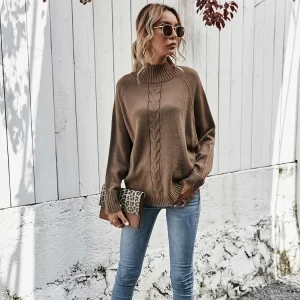
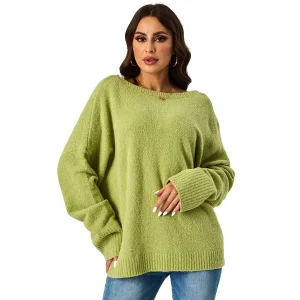
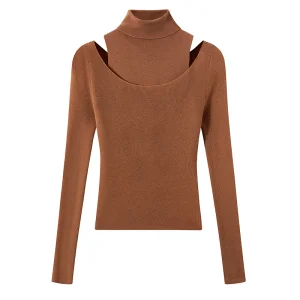
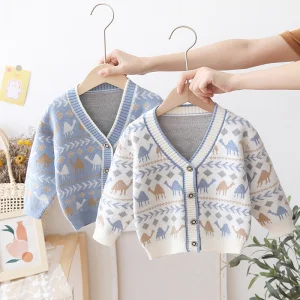
The Democratic Republic of the Congo: Sourcing Landscape for Knitted Apparel
Developing a dependable supply chain for knitwear in the Democratic Republic of the Congo (DR Congo) requires a granular understanding of regional climate patterns, trade corridors, and socio-economic dynamics. Although situated along the equator, the geography of DR Congo features substantial elevation variations. The eastern highland provinces, including North Kivu (Goma) and South Kivu (Bukavu), along with the southern Katanga plateau (Lubumbashi), experience cool nights and distinct cold seasons where heavy knitwear and custom sweaters are daily necessities.
Simultaneously, urban centers like Kinshasa present unique commercial demands. In the capital, custom sweaters are highly sought after for school uniforms, corporate identity wear, religious organizations, and high-fashion retail outlets in Gombe. Due to a limited local manufacturing base for fine gauge knitwear, Congolese companies and distributors rely on global manufacturers—most notably state-of-the-art factories in Dongguan, China—to supply high-quality, durable, and cost-effective knitwear at scale.
Key Application Scenarios in the Congolese Market
- Institutional & Academic Uniforms: High-durability V-neck sweaters and cardigans in navy, dark green, and maroon for primary and secondary schools in Kinshasa and Katanga.
- Corporate Branding & Mining Workwear: Customized sweaters featuring high-density embroidery for mining operations, telecommunication firms, and banking institutions.
- Boutique & Retail Fashion: High-end cashmere blends, cardigans, and stylish oversized knitwear for premium apparel boutiques in Gombe and Lubumbashi.
- Ecclesiastical & Group Uniforms: Custom-designed, color-coded knits utilized by church congregations, choir groups, and non-governmental organizations nationwide.
About Dongguan Mibel Garment Co., Ltd.
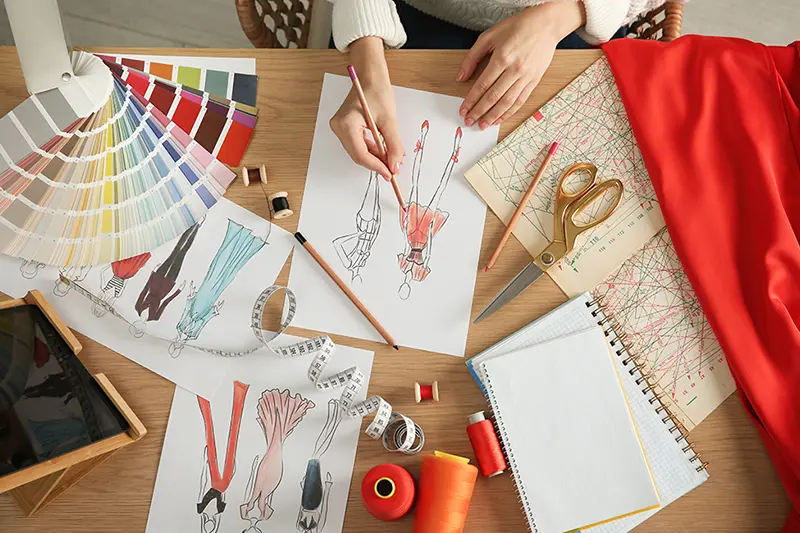
Founded in April 2007 in Dongguan City, Guangdong Province, Dongguan Mibel Garment Co., Ltd. (referred to as Mibel) specializes in designing, researching, and producing custom uniforms and knitwear. Integrating professional design services and fabric business, Mibel has established itself as a leading garment producer in South China, receiving national recognition for its scale, technical expertise, and operational capability.
Mibel operates over 100 advanced machines and 3 specialized production lines dedicated to uniforms, dust-free technical wear, and premium shirts, generating an annual production capacity of over 1 million pieces. Over the past decade, Mibel has successfully partnered with more than 1,000 clients across over 10 countries. Supported by a skilled workforce of 100 employees, including 30 experienced technicians, the enterprise is certified under the ISO9001 Quality Management System, guaranteeing structured, repeatable excellence from design to delivery.
Sourcing Advantages & Strategic Trade Lanes for DR Congo Sourcing Agents
Sourcing directly from our Dongguan manufacturing hub offers Congolese distributors, corporate entities, and governmental institutions significant structural advantages:
1. Superior Yarn Selection & Gauge Control
From lightweight 12GG and 14GG cotton/acrylic blends ideal for the humid Kinshasa climate, to heavy 7GG/5GG wool and cashmere options engineered for South Kivu and Katanga, we precisely control composition for optimal comfort and wear-resistance.
2. Comprehensive Quality Compliance
We understand the rigorous requirements of the Office Congolais de Contrôle (OCC). Our QC inspectors collaborate with internationally recognized agencies like SGS and Bureau Veritas to execute pre-shipment inspections, ensuring hassle-free clearance at entry points.
3. Efficient Logistics Routing
Whether routing maritime freight via the Port of Matadi for Kinshasa distribution, or utilizing East African corridors (Mombasa and Dar es Salaam ports) to reach Lubumbashi, Goma, and Bukavu, we prepare export packaging designed for complex multi-modal transit.
Extended Commercial & Industrial Catalog
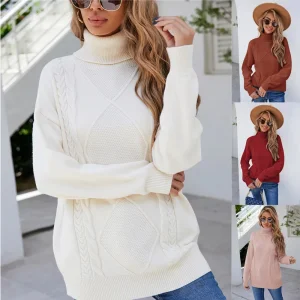
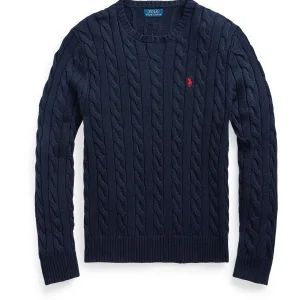
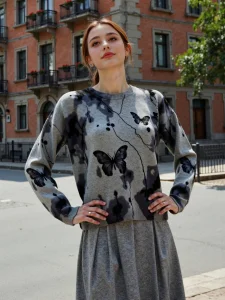
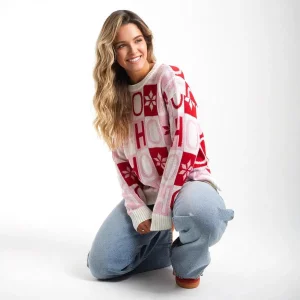
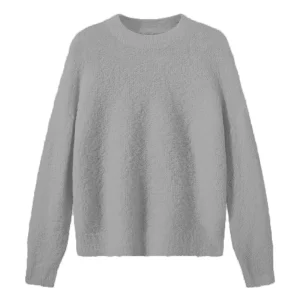
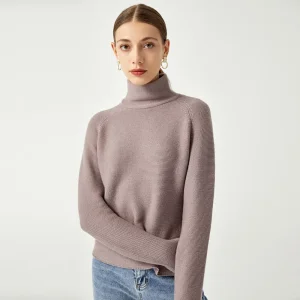
Explore our highly configurable knitwear designs, developed to accommodate custom embroidery, high-frequency washes, and diverse demographic demands.
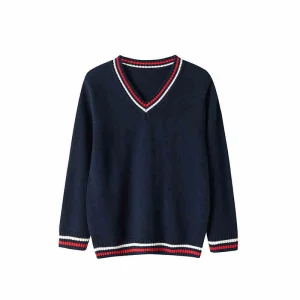
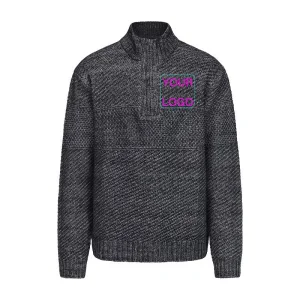
Technical Specification Guide for DR Congo Sweater Sourcing
Achieving structural reliability in the Congolese apparel sector hinges on selecting proper material weights and knit densities. Due to the high humidity levels across the Congo River Basin and the cooler elevations of the eastern provinces, we advise clients to refer to the following guide prior to finalizing production parameters:
1. Lowland & Coastal Regions (Kinshasa, Boma)
Recommended Gauges: 12GG, 14GG (Fine knit)
Fabric Blends: 100% Cotton, Cotton-Viscose, Cotton-Acrylic (60/40 ratio).
Key Metric: High breathability, moisture absorption, resistance to color fading in bright sunlight, and excellent machine-wash stability.
2. Highland & Plateau Regions (Goma, Bukavu, Lubumbashi)
Recommended Gauges: 7GG, 9GG, 12GG (Medium to heavy knit)
Fabric Blends: 100% Acrylic, Wool-Acrylic blends (30/70 or 50/50 ratio), 100% Merino Wool for premium sectors.
Key Metric: Thermal insulation, high stretch recovery, pills-resistant yarn finishes, and high durability for daily academic or workplace wear.
Frequently Asked Sourcing Questions
Important information regarding shipping, custom branding, and compliance protocols for sourcing custom knitwear to the DR Congo.
All garment shipments entering the DR Congo require a FERI (Fiche Électronique des Renseignements à l'Importation) certificate issued by OGEFREM. Additionally, products are subject to conformity evaluation by the Office Congolais de Contrôle (OCC). Mibel collaborates closely with SGS and Bureau Veritas to execute pre-shipment inspections in China, ensuring that all paperwork and testing meet Congolese national import standards.
Our standard MOQ for custom uniform sweaters is generally 500 pieces per style/color, which allows us to source specific, dye-matched yarns and configure high-speed industrial knitting machinery efficiently. However, for established retail networks, school uniform buyers, or large-scale mining operations, we can accommodate smaller pilot orders depending on yarn availability.
Sample production and approval typically require 7 to 10 working days. Bulk production takes 25 to 35 days, depending on style complexity and order volume. Maritime transit from Shenzhen/Guangzhou ports to the Port of Matadi averages 35 to 45 days. In total, buyers should plan a lead time of 75 to 90 days from design sign-off to delivery in Kinshasa.
Yes, we specialize in custom sizing patterns. We develop specific measurement charts suited for local requirements, including loose-fit styling, extended sleeve cuts, and structured shoulders. Clients can submit their own size specifications, or utilize our pre-engineered sizing standard optimized for Central African markets.