Featured Custom Apparel & Components

Global Industry Landscape & Commercial Realities
The global custom embroidery industry has undergone a monumental shift from a localized craft to a highly digitized, multi-billion-dollar global supply network. Driven by the surge in custom apparel demand, corporate branding identity requirements, and fast fashion dynamics, industrial-scale computerized embroidery has become a key driver in premium textile customization.
Today, advanced factories utilize multi-head automatic embroidery equipment connected directly to cloud-based design storage. Technologies from manufacturers such as Tajima, Barudan, and ZSK enable factories to scale operations dynamically. Sourcing agents are no longer just looking for a facility with simple sewing machines; they require vendors equipped with optical camera sensors, automatic thread tension regulators, and AI-assisted digitizing software that converts vector files into precise DST or PES formats with zero human-introduced errors.
From a macro-economic standpoint, centers of production have specialized geographically. Regional clusters in Southern China (e.g., Dongguan, Shenzhen) excel at integration, raw material availability, and highly precise custom apparel manufacturing. Other regions in Southeast Asia and Eastern Europe support high-volume runs, while localized workshops in Western markets handle quick-turn, high-premium micro-batches.
Macro Industry Trends Shaping Global Sourcing
1. Automated Digitization
Traditional vector-to-stitch digitization was a highly manual, time-consuming task prone to high error rates. Modern plants are leveraging artificial intelligence and machine learning pipelines to automate density analysis, underlay selection, and pull compensation, cutting setup times by up to 80%.
2. Sustainability & Eco-threads
Global compliance and sustainability mandates are pushing factories to adopt recycled polyester threads, biodegradable rayon, and organic cotton backings. Companies that display certificates like OEKO-TEX Standard 100 and GOTS are quickly capturing premium market shares.
3. Hybrid Embellishment
Combining DTG (Direct-to-Garment) printing, screen printing, and puff embroidery on a single canvas is a dominant design trend. Modern factories are configuring in-line conveyor setups to pass garments directly from printing beds to embroidery hoops seamlessly.
Leading Industry Supplier: Dongguan Mibel Garment Co., Ltd.
Precision Apparel Engineering & High-Capacity Production
Dongguan Mibel Garment Co., Ltd. (referred to as Mibel) specializes in designing, researching, and producing uniforms. It integrates services and fabric business, founded in April 2007, based in Dongguan city, Guangdong province. Mibel is renowned for its large scale, capable design, and rich culture, making it a key enterprise in Guangdong and a leading garment producer in South China, with national recognition.
Mibel operates over 100 advanced machines and 3 production lines for uniforms, dust-free cloth, and shirts, with an annual production capacity of 1 million pieces. Over the past decade, Mibel has served more than 1000 clients across over 10 countries. With 100 employees, including 30 technicians, its major products fall into 2 categories: high-grade clothing and customized clothing. As a renowned brand in Guangdong province, Mibel is ISO9001 Quality Management System certified. Its managerial team, comprising professionals in garment design, computer embroidery, fabrics, management, and marketing, generates synergistic effects. Mibel aims to expand and strengthen its presence in the industry.
OEM & ODM Custom Embroidery Solutions
We excel in professional clothing Original Equipment Manufacturing (OEM) and Original Design Manufacturing (ODM) services. With years of industry expertise, we offer comprehensive solutions tailored to meet our clients' unique needs and specifications. Our dedicated team oversees every aspect of the production process, from initial design concepts to final product delivery. We specialize in bringing our clients' visions to life, ensuring each garment reflects their brand identity and quality standards. Whether it's creating custom designs or manufacturing existing ones, we provide personalized support and guidance every step of the way. Partner with us for exceptional clothing OEM and ODM services.
Concept Development
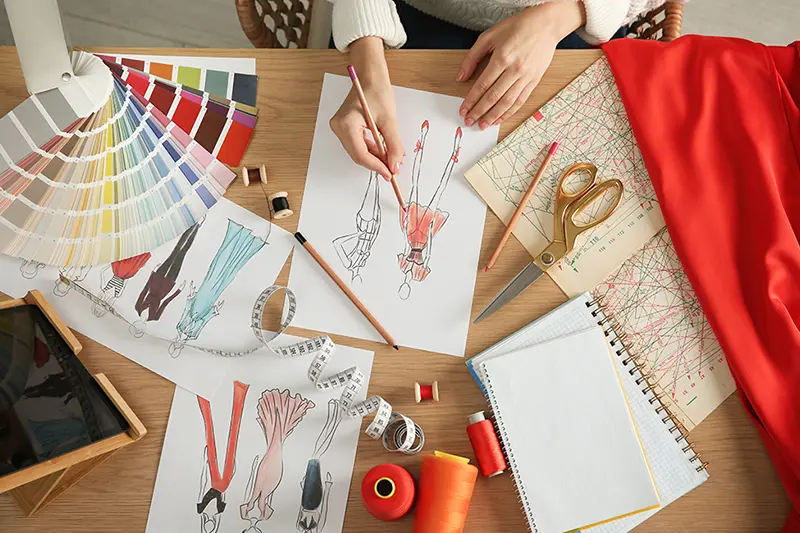
From initial design draft and tech pack optimization to precise digitizing vector generation, we convert your conceptual branding into stitch-perfect matrices.
Material Sourcing
Choosing proper fabric weights, premium thread materials (viscose, polyester, metallic), and optimized backing stabilizers to prevent puckering and degradation.
Mass Production
Leveraging high-speed multi-head embroidery rigs to guarantee color consistency, strict tension control, and prompt delivery schedules.
Top 10 Global Custom Embroidery Factories & Suppliers
Dongguan Mibel Garment Co., Ltd.
Location: Guangdong, China
Specialization: Enterprise uniforms, corporate workwear, sportswear, high-volume computer embroidery, and comprehensive apparel OEM/ODM.
Why choose them: Houses 100+ advanced machines, certified by ISO9001, offering robust material options and highly reliable custom patterns and sizes.
Embroidery House Inc.
Location: California, USA
Specialization: Localized high-end apparel customization, athletic wear personalization, and high-density puff embroidery.
Why choose them: Fast domestic turnaround, strict QA controls, and low minimum order quantities (MOQ) for premium fashion labels.
Tirupur Apparel Exporters
Location: Tamil Nadu, India
Specialization: Mass-volume organic cotton clothing, knitwear embroidery, and large-scale fast fashion orders.
Why choose them: Very competitive bulk pricing, compliance with global environmental standards, and rich fabric source availability.
ZSK Embroidery Solutions GmbH
Location: Krefeld, Germany
Specialization: Industrial equipment and specialty technical textile embroidery (conductive yarns, composite layups).
Why choose them: Renowned for high-precision German engineering, automated industrial systems, and smart textile solutions.
Istanbul Embroidery Guild
Location: Istanbul, Turkey
Specialization: Mid-to-high end fashion clothing, intricate thread textures, and rapid supply chain response for European markets.
Why choose them: Strategic geographical location for EU clients and expertise in delicate fabric work.
Vanguard Apparel Ltd.
Location: Ho Chi Minh City, Vietnam
Specialization: Large-scale performance sportswear, outdoor garments, and automated pattern placement.
Why choose them: Strong trade agreements, low tariff access, and modern high-speed Japanese embroidery arrays.
Prada & Partners Embroidery
Location: Prato, Italy
Specialization: High-luxury fashion embellishments, handcrafted metallic stitching, and haute couture custom designs.
Why choose them: Uncompromising craftsmanship, premium thread selections, and artistic design development.
Sino-Tex Custom Embroidery
Location: Zhejiang, China
Specialization: High-volume caps, bags, patches, and promotional wear embellishment.
Why choose them: Exceptional cost efficiencies, massive daily output capacity, and integrated logistics systems.
Tajima Direct Services
Location: Tokyo, Japan
Specialization: Software integrated digitizing services and high-complexity computerized prototype runs.
Why choose them: Direct access to cutting-edge Tajima machinery technology and unparalleled digital accuracy.
Pinnacle Merchandise Corp.
Location: London, UK
Specialization: Bespoke corporate identity assets, high-thread-count logos, and school uniform contracts.
Why choose them: Strong domestic customer service, detailed proofing processes, and eco-friendly packaging integration.
Technological Sourcing Roadmap & QA Checklist
Purchasing agents must ensure that suppliers maintain rigorous engineering controls over the physical properties of the stitching. Below is the roadmap to verify during the pre-production sample stage:
- Stitch Density & Underlay Structure: Insist on a high-density fill stitch that avoids showing the background garment, combined with a robust grid or contour underlay to lock down elastic fabrics.
- Pull Compensation Optimization: Ensure your digitizer applies appropriate pull compensation parameters. Embroidery naturally pulls fabric inward, which can distort geometric logos if not adjusted.
- Backing Material Matching: Evaluate the backing materials. Tear-away backings work best for heavy canvas and caps, whereas cut-away backing is necessary to support knits and stretchy sportswear through repeated wash cycles.
- Thread Composition Selection: Polyester thread offers high colorfastness and bleach resistance, making it ideal for uniforms and sportswear. Rayon thread offers a brighter sheen and softer drape, preferred for fashion garments.
Frequently Asked Questions (FAQ)
Moqs vary considerably depending on the supplier. Industrial facilities typically require 100 to 500 units per design to optimize machinery setup and amortization costs. Smaller domestic shops may offer MOQs as low as 10 to 50 units but at a higher cost per unit.
Embroidery is priced based on stitch count (the total number of stitches required to complete the design), order volume, design complexity, thread types (e.g., metallic vs. standard polyester), and the number of print-to-embroidery transitions required on a single garment.
While you can provide high-resolution vectors (AI, EPS, SVG, or high-res PDF), the factory must ultimately digitize these into machine-readable stitching formats, most commonly DST (Tajima), PES (Brother), or EXP (Melco).
3D puff embroidery utilizes a layer of ethylene-vinyl acetate (EVA) foam placed over the garment during the stitching process. The needle stitches over the foam, cutting it cleanly along the edges to create a raised, dimensional effect. This technique requires higher stitch counts and is best suited for simple, bold designs like block lettering on caps.